Menu

ETL for Energy Data

Energy ETL turns raw data from public, vendor, and internal sources into structured datasets that can be used across trading, analytics, risk, reporting, and operations. In energy, extraction and transformation must account for source-specific formats, irregular release schedules, time-series complexity, and changing external data structures.

Why ETL is more complex in energy workflows

Energy ETL is not a generic extract-transform-load process. Each source may require different collection logic, transformation rules, timing, and validation before the data can be used reliably downstream.

Fragile source behavior

External sources can change formats, fields, publication timing, or access rules. ETL processes need ongoing maintenance, not only initial setup.

Complex transformations

Raw energy data often needs changes to timestamps, units, product definitions, locations, market zones, and reporting periods before it can be compared or combined.

Irregular release timing

Some datasets update in near real time, while others are released hourly, daily, weekly, or on irregular schedules. ETL logic must account for when data is actually available.

Source-specific extraction

Energy data comes from APIs, files, portals, PDFs, vendor feeds, and internal systems. Each source may require a different way to collect and interpret the data.

What reliable energy ETL needs

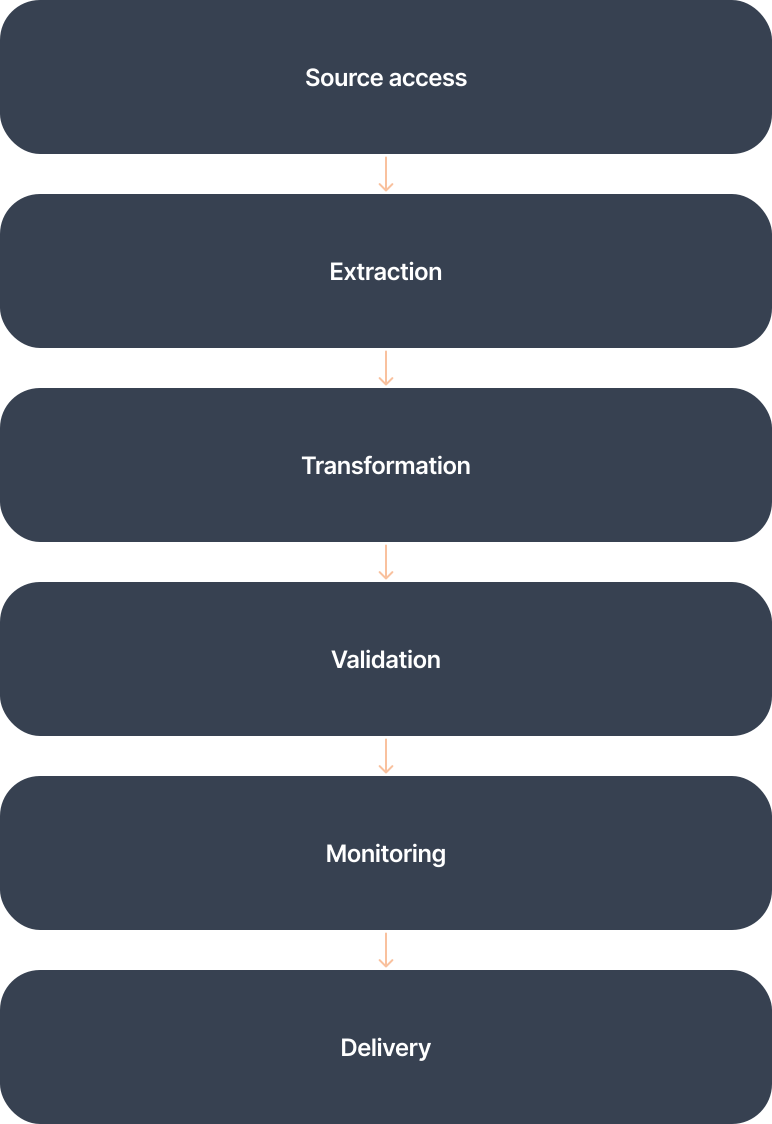
Reliable ETL requires more than extracting data and loading it into a database. It needs source-specific collection logic, repeatable transformations, validation, monitoring, and delivery into the workflows where teams use the data.

How Shooju supports energy ETL

Shooju manages the ETL layer as an ongoing operational service, using its platform to collect, transform, monitor, and deliver energy data.

Dataset-level collection

Collection logic is configured around the source, dataset, release timing, and required freshness.

Source-specific transformation

Data is transformed based on the structure and rules of each source before it enters downstream workflows.

Validation and monitoring

Shooju monitors expected releases, data availability, and pipeline behavior so issues can be identified and addressed proactively.

Standardized outputs

Processed data is mapped into Shooju’s proprietary data infrastructure (Shooju time series) for consistent downstream reuse.

Workflow delivery

Data can be delivered into customer systems, databases, APIs, Excel, Python, Power BI, Tableau, C#, and other environments.

Evaluate your current energy data infrastructure

If your team is managing multiple energy data sources, manual workflows, unstable pipelines, or fragmented downstream access, we can review where your current setup creates operational risk and what it would take to improve it.

Book a 30-min Call