Menu

Energy Data Pipelines

Energy data pipelines connect fragmented public, vendor, and internal data sources into reliable workflows for trading, analytics, risk, reporting, and operations. In energy, pipelines must handle changing formats, irregular publication schedules, time-series complexity, and downstream delivery requirements.

Why energy data pipelines are different

Energy data pipelines are not just a way to move data from one system to another. In energy workflows, they sit between fragmented external sources, internal models, trading decisions, reporting needs, and downstream analytical tools.

High Downstream Dependency

The same source may support trading, forecasting, risk, reporting, and operations. If the pipeline breaks, the impact is not limited to one dashboard.

Time-Series and Metadata Complexity

Timestamps, time zones, units, locations, zones, asset names, reported dates, and revisions all need consistent handling before the data becomes usable.

Mixed Formats and Access Methods

Energy data often arrives through APIs, files, portals, PDFs, scraped pages, and vendor feeds. A reliable pipeline needs to handle all of them without creating a separate process for each source.

Externally Controlled Sources

Many critical datasets come from TSOs, ISOs, exchanges, regulators, vendors, portals, and public websites. Internal teams do not control when formats, fields, or publication rules change.

What a reliable architecture needs

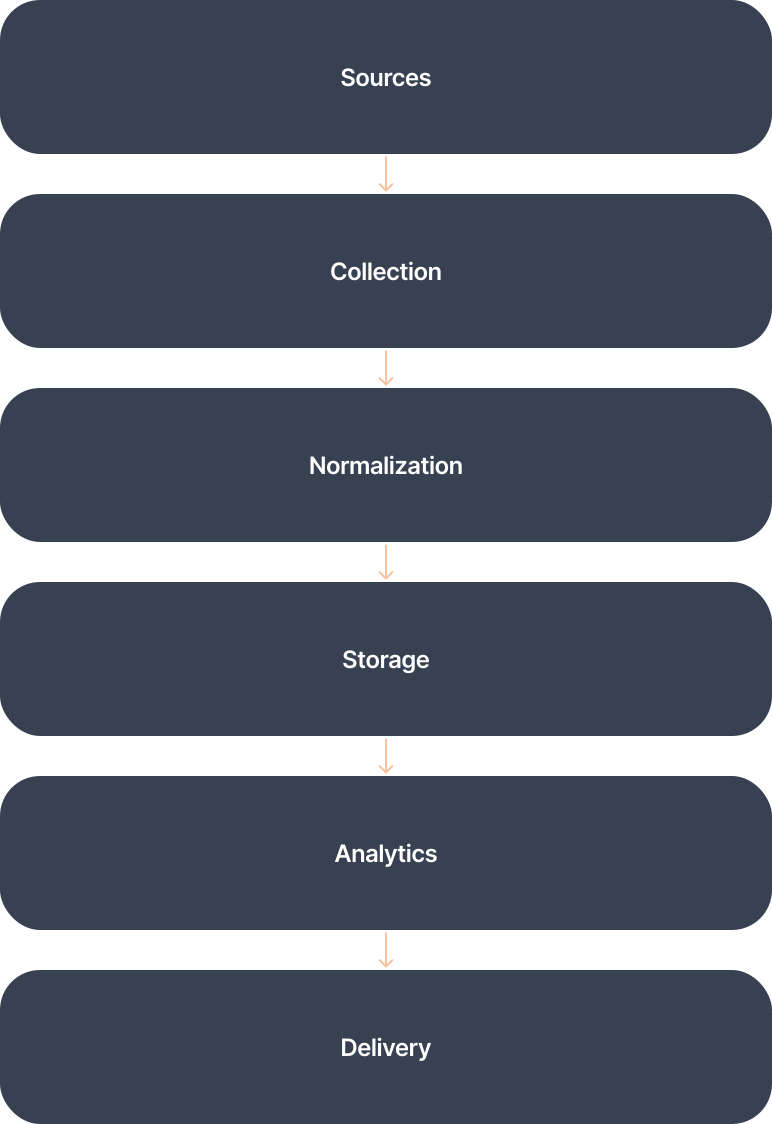
A reliable energy data infrastructure needs more than source access. It needs a repeatable operating model for collecting data, handling source-specific formats, standardizing time-series and metadata, monitoring pipeline health, and delivering usable outputs into the systems where teams actually work.

How Shooju supports production energy data pipelines

Shooju combines managed delivery with a proprietary data platform to collect, normalize, monitor, and deliver energy data across client workflows.

Data Collection

Shooju connects to public, vendor, and customer-specific internal sources, including APIs, files, portals, PDFs, OCR-based sources, and internal systems.

Normalization and Enrichment

Data is standardized into usable time-series or structured datasets, with metadata applied where needed for zones, assets, locations, units, and reporting context.

Storage and Retrieval

Clean data can be stored in Shooju or delivered into the customer’s existing database or cloud environment, depending on the deployment model.

Pipeline Management

Dataflows are configured, monitored, and maintained by the Shooju team, so source changes, failures, and irregular release schedules are handled as part of ongoing delivery.

Delivery into Workflows

Data can be made available through Excel, APIs, Python, Power BI, Tableau, C#, and other downstream systems already used by trading, analytics, and operations teams.

Evaluate your current energy data infrastructure

If your team is managing multiple energy data sources, manual workflows, unstable pipelines, or fragmented downstream access, we can review where your current setup creates operational risk and what it would take to improve it.

Book a 30-min Call