Menu

Energy Data Normalization

Energy data normalization makes fragmented source data consistent enough to combine, analyze, and use across workflows. It aligns source-specific structures, units, timestamps, locations, products, and metadata into a common operational data layer.

Why energy data needs normalization

Energy datasets often describe similar market conditions in different ways. Without normalization, teams spend time translating source-specific formats and may produce inconsistent results across models, reports, dashboards, and trading workflows.

Missing business context

Raw source data rarely includes the customer-specific classifications needed for internal reporting, analytics, trading, or operational workflows.

Different geographic structures

The same market may be represented through zones, hubs, nodes, regions, balancing areas, assets, or internal location names.

Time-series misalignment

Time zones, timestamps, delivery periods, daylight-saving changes, publication dates, and revisions can make direct comparison difficult.

Inconsistent units and definitions

Sources may use different units, product definitions, naming conventions, and reporting structures for comparable data.

What a normalized energy data layer needs

A usable normalized data layer maps source-specific fields into consistent structures, enriches them with business-relevant metadata, and preserves the context needed to reuse the data across different workflows.

How Shooju normalizes energy data

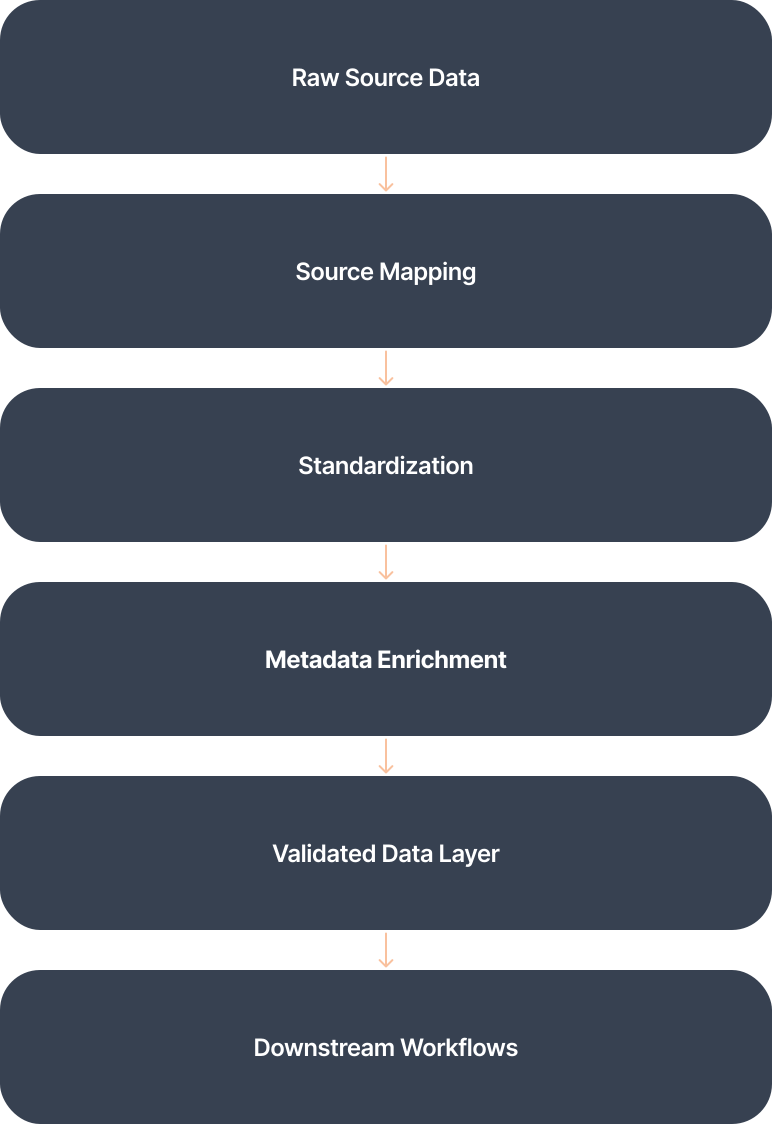
Shooju maps source data into its proprietary data infrastructure (Shooju time series) and applies metadata based on how each customer uses the data.

Source-to-model mapping

Source-specific fields and structures are mapped into a consistent internal data model.

Time-series standardization

Timestamps, time zones, reporting dates, delivery periods, and revisions are handled consistently across datasets.

Metadata enrichment

Products, units, locations, zones, assets, and internal naming conventions can be added based on customer requirements.

Reusable business context

Normalized datasets can support multiple teams and tools without recreating source-specific logic in each workflow.

Ongoing maintenance

Normalization logic can be maintained as source structures or customer requirements evolve.

Evaluate your current energy data infrastructure

If your team is managing multiple energy data sources, manual workflows, unstable pipelines, or fragmented downstream access, we can review where your current setup creates operational risk and what it would take to improve it.

Book a 30-min Call