Why energy data infrastructure is difficult to build and maintain
Data pipelines for messy, fragmented energy data are expensive to build, fragile to maintain, and too slow to deliver into analysis-ready formats. The challenge is not only collecting data from many sources, but keeping those sources reliable, standardized, monitored, and usable across trading, analytics, risk, reporting, and operational workflows.

Fragmented source landscape
Energy teams rely on a wide mix of public, vendor, exchange, regulatory, and internal sources.

Mixed formats and access methods
Sources use APIs, portals, files, PDFs, OCR, vendor feeds, and custom formats.

Source volatility
Fields, formats, schedules, access rules, or file structures can change without notice.

High maintenance burden
Every new source, format change, failed job, or downstream request adds engineering work.

Slow path to usable data
Raw data needs alignment, standardization, metadata, transformation, and validation before use.

Downstream dependency
One upstream issue can affect Excel, APIs, BI, Python workflows, databases, and trading tools.
Explore core energy data infrastructure topics
Start with the foundational topics behind production-ready energy data workflows.
Energy Data Analytics
Energy data analytics depends on more than dashboards and calculations. It requires consistent source data, reusable analytical logic, and a data layer that supports reliable analysis across trading, forecasting, risk, reporting, and operational workflows.
View Details→
AI-Ready Energy Data
AI workflows in energy depend on reliable, consistent, and contextual data upstream. AI-ready energy data is collected from the right sources, normalized across formats and time series, enriched with business context, and delivered in a form that models and teams can use consistently.
View Details→
Energy Data Integrations
Energy data integrations deliver standardized data into the tools and systems where trading, analytics, risk, reporting, and operations teams already work. The goal is not simply to move data, but to make it usable without repeated manual preparation or source-specific logic in every downstream tool.
View Details→
Energy Data Normalization
Energy data normalization makes fragmented source data consistent enough to combine, analyze, and use across workflows. It aligns source-specific structures, units, timestamps, locations, products, and metadata into a common operational data layer.
View Details→
ETL for Energy Data
Energy ETL turns raw data from public, vendor, and internal sources into structured datasets that can be used across trading, analytics, risk, reporting, and operations. In energy, extraction and transformation must account for source-specific formats, irregular release schedules, time-series complexity, and changing external data structures.
View Details→
Energy Data Pipelines
Energy data pipelines connect fragmented public, vendor, and internal data sources into reliable workflows for trading, analytics, risk, reporting, and operations. In energy, pipelines must handle changing formats, irregular publication schedules, time-series complexity, and downstream delivery requirements.
View Details→
From fragmented sources to usable workflows
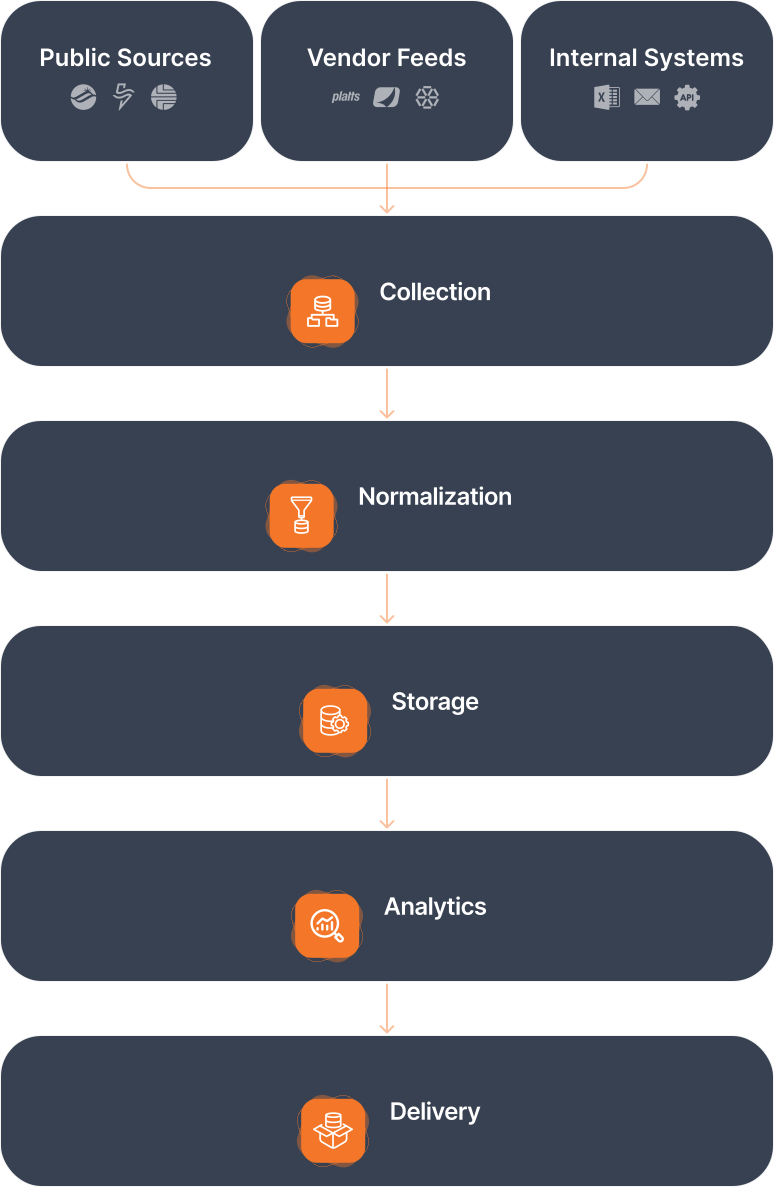
A production-ready setup connects source collection, normalization, monitoring, storage, analytics, and delivery into one managed operating model.
See how Shooju connects, normalizes, monitors, and delivers energy data through managed pipelines powered by our platform.



.svg)