Menu

AI-Ready Energy Data

AI workflows in energy depend on reliable, consistent, and contextual data upstream. AI-ready energy data is collected from the right sources, normalized across formats and time series, enriched with business context, and delivered in a form that models and teams can use consistently.

Why AI in energy depends on data infrastructure

AI workflows in energy are only as reliable as the data behind them. Fragmented, inconsistent, delayed, or poorly contextualized inputs limit the quality and usability of AI outputs.

Operational reliability matters

AI outputs are only as reliable as the data pipeline that supplies them. Missing, delayed, or changed source data can affect downstream models and decisions.

Business logic scattered downstream

Critical calculations, classifications, and assumptions may be buried in spreadsheets, notebooks, dashboards, or analyst workflows.

Inconsistent historical data

Models need comparable time series, stable definitions, and reliable metadata. Raw source data often does not provide this by default.

Fragmented source inputs

AI workflows may depend on data from market operators, exchanges, vendors, weather services, internal systems, and historical files.

What AI-ready energy data needs

AI-ready data requires a reliable upstream operating model: source collection, normalization, metadata enrichment, monitoring, and reusable business logic before the data reaches AI, forecasting, or automation workflows.

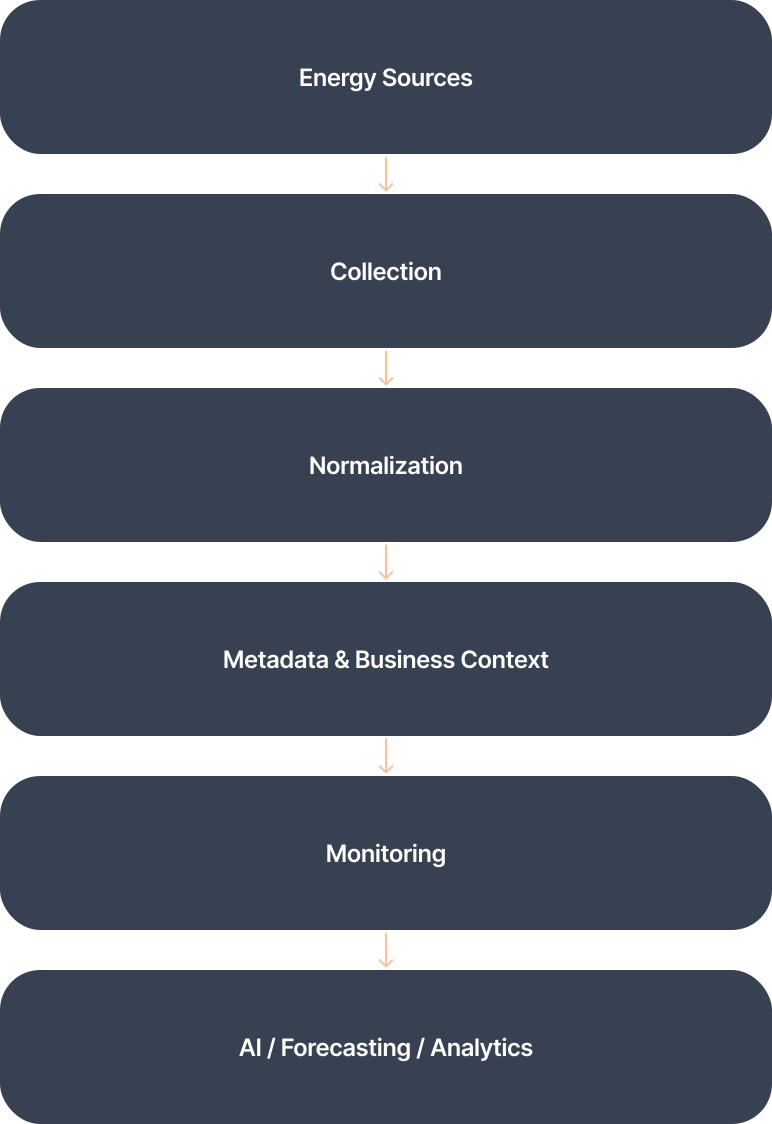
How Shooju prepares energy data for AI workflows

Shooju helps move data preparation, normalization, and common analytical logic upstream so AI and analytical workflows can work from more consistent inputs.

Reliable source collection

Shooju connects and maintains the public, vendor, and internal sources needed for the workflow.

Normalized data structures

Source-specific formats are mapped into consistent datasets that can be reused across models and teams.

Business-context enrichment

Metadata can be applied around products, units, locations, zones, assets, timestamps, and internal business definitions.

Centralized reusable logic

Common transformations and analytical functions can be handled upstream instead of recreated across individual downstream workflows.

Production-oriented delivery

Data can be delivered into the environments where forecasting, analytics, automation, and AI workflows already operate.

Evaluate your current energy data infrastructure

If your team is managing multiple energy data sources, manual workflows, unstable pipelines, or fragmented downstream access, we can review where your current setup creates operational risk and what it would take to improve it.

Book a 30-min Call