Menu

Energy Data Integrations

Energy data integrations deliver standardized data into the tools and systems where trading, analytics, risk, reporting, and operations teams already work. The goal is not simply to move data, but to make it usable without repeated manual preparation or source-specific logic in every downstream tool.

Why integration is key in energy

Energy teams rarely work in one system. The same data may need to support analyst models, trading tools, reports, dashboards, APIs, internal applications, and databases at the same time.

Shared data, different uses

The same standardized source can support trading decisions, forecasting, risk analysis, reporting, and operational planning.

Different freshness requirements

Some workflows require fast access to new data, while others depend on scheduled updates, historical data, or end-of-day reporting.

Repeated source-specific preparation

When each tool connects directly to source data, teams often recreate transformations, mappings, and calculations in multiple places.

Multiple downstream environments

Teams may work in Excel, Python, Power BI, Tableau, C#, APIs, databases, and internal applications.

What reliable energy data integration needs

A reliable integration layer separates source-specific collection and transformation from downstream use. It creates a consistent data layer that can feed multiple tools without each environment needing to interpret the original source.

How Shooju delivers data into existing workflows

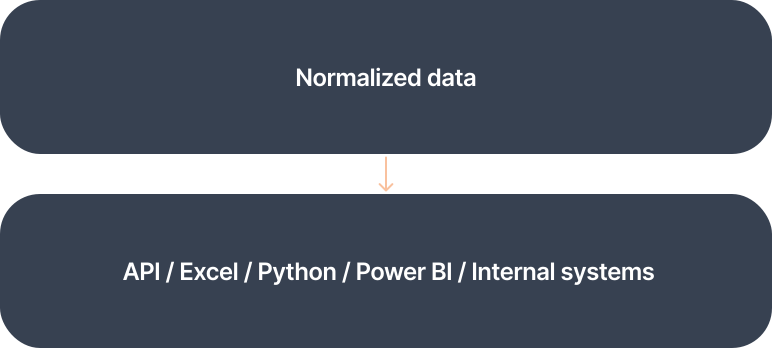
Shooju prepares data centrally, then delivers it into the systems customers already use rather than requiring teams to adopt a single new interface.

Centralized data preparation

Source-specific collection and normalization happen upstream, before data reaches downstream tools.

Multiple delivery options

Data can be delivered through Excel, APIs, Python, C#, Power BI, Tableau, customer databases, and internal applications.

Shared datasets across workflows

The same standardized data can support multiple teams without separate preparation in each tool.

Customer-specific integration design

Delivery is configured around the systems, formats, and access patterns already used by the customer.

Managed delivery

Shooju maintains the integration layer as sources, data requirements, or downstream systems change.

Evaluate your current energy data infrastructure

If your team is managing multiple energy data sources, manual workflows, unstable pipelines, or fragmented downstream access, we can review where your current setup creates operational risk and what it would take to improve it.

Book a 30-min Call